

Report by Willa Sachs
| Willa Sachs is a PhD candidate in Sociology at Yale University and a Junior Fellow at the Yale Center for Cultural Sociology. |
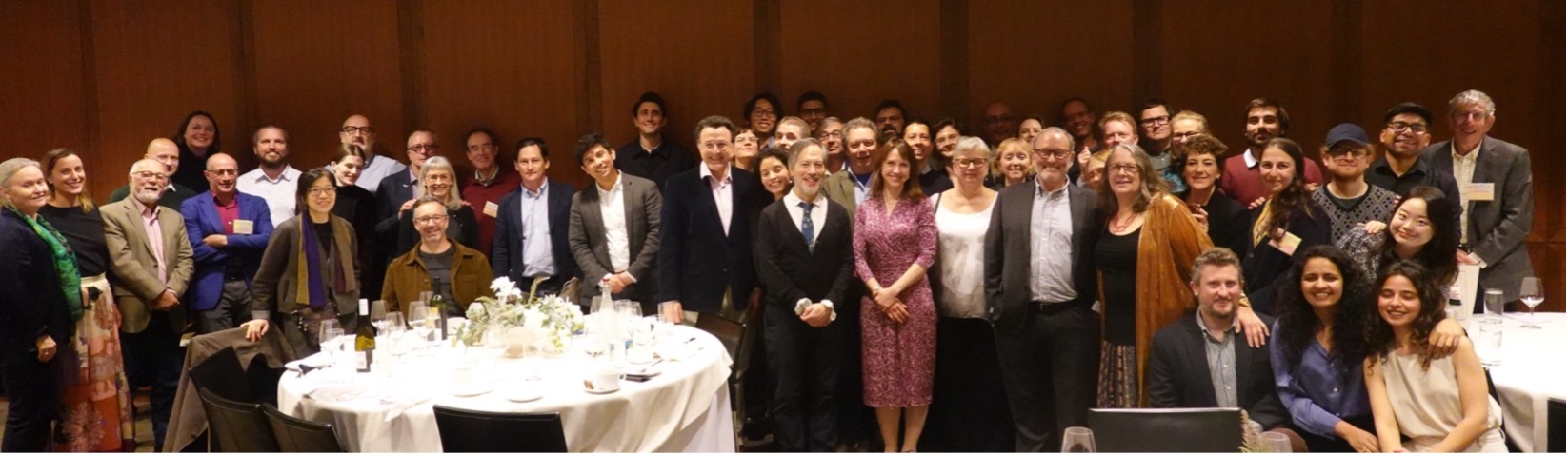
Last October, friends, students, and colleagues of Jeffrey C. Alexander gathered in Yale University’s Humanities Quadrangle to celebrate his retirement after an academic career spanning over five decades. The conference, entitled “Working Towards Meaning Together: Jeffrey Alexander’s Legacy for Sociology,” drew scholars from all over the world, including Sweden, Colombia, China, Italy, Czechia, Canada, and Scotland. The conference commemorated not only ‘Alexander’ the prolific social theorist, as one conference speaker put it, but ‘Jeff’ the friend and mentor.
| Presenters overviewed Alexander’s pioneering contributions to social theory, including cultural iconicity, civil sphere theory, cultural trauma theory, cultural pragmatics, structural hermeneutics, and the development of the Strong Program. The core tenets of Alexander’s oeuvre, asserted the speakers, include structural voluntarism, social solidarity, multidimensionality, the binary discourses of civil society, the relative autonomy of culture, a postpositivist conception of social science, and a commitment to democracy and civil inclusion as utopian ideals. The speakers detailed the impressive empirical depth of Alexander’s work and his application of these theories to hundreds of social processes, social movements, and political issues, from the Watergate Scandal to Iran Contra to the advent of Trumpism. The speakers also traced Alexander’s collaborative efforts with scholars writing from a variety of national perspectives to “deprovincialize” civil sphere theory and apply its core insights in other cultural contexts, which culminated in the publication of such volumes as The Civil Sphere in South Asia and The Civil Sphere in Latin America. A key theme of the conference was Alexander’s mid-career transition away from the functionalist theories of Talcott Parsons toward the development of a “strong” theory of culture. The speakers traced Alexander’s rejection of materialism and realism and the influence of such thinkers as Emile Durkheim, Ferdinand de Saussure, and Claude Levi-Strauss on this line of thinking. The conference speakers recalled the development of the “culture club,” an informal study group formed in 1984 at the University of California, Los Angeles. Over the next decade, the Culture Club would build the foundations of the Strong Program and provide the intellectual scaffolding for the Yale Center for Cultural Sociology (CCS), formed approximately twenty years later. |
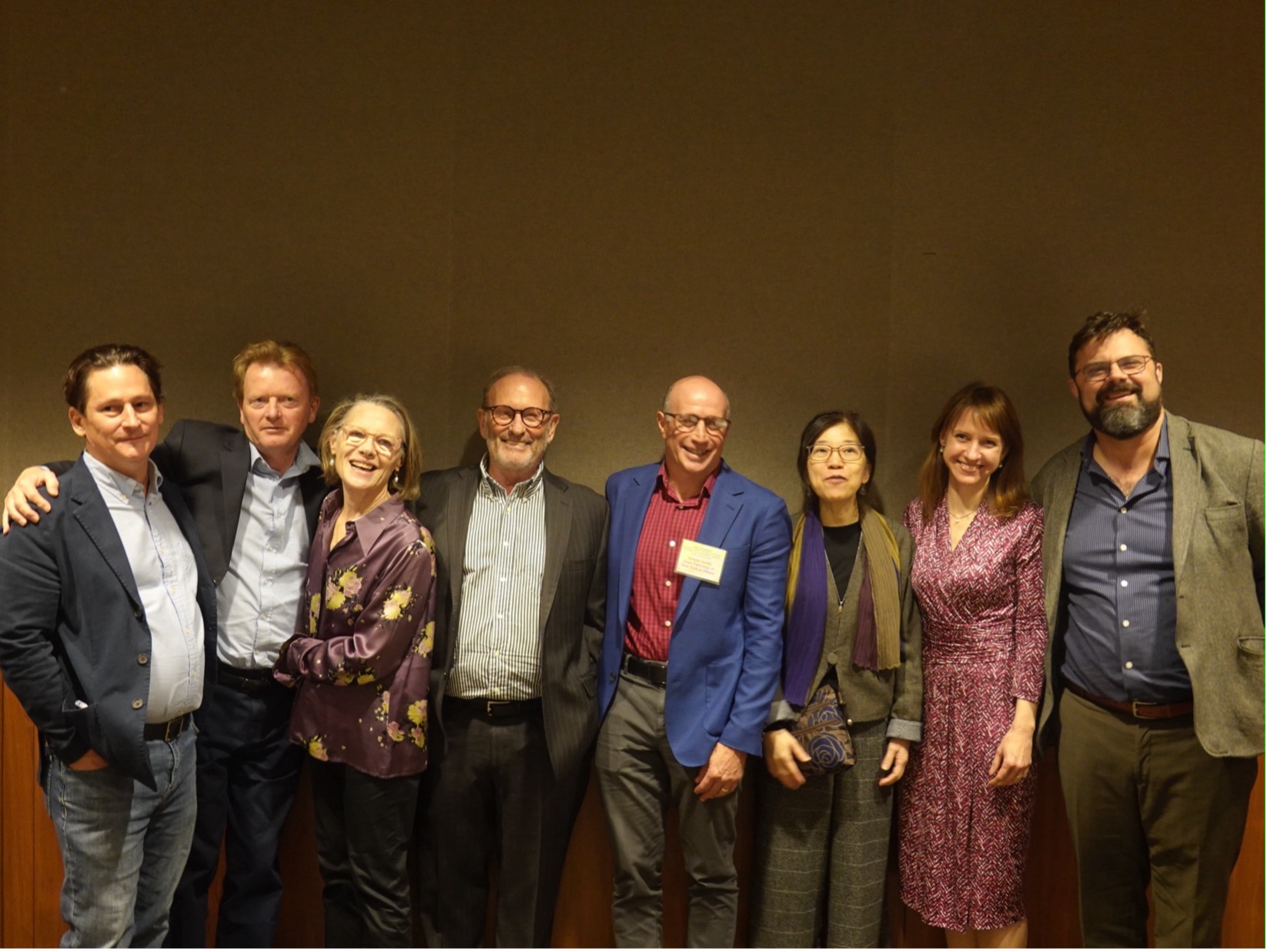
Another particularly striking theme that emerged in the formal talks and informal discussions that followed was that, for all his years spent writing about Emile Durkheim and collective representations, Jeff himself had become something of a totem – or, at the very least, an “iconic intellectual,” whose work merited canonization. While Alexander laughingly waved away such pronouncements as too saccharine, it was a clear point of consensus among conference attendees.
Indeed, Alexander represents a kind of totemic figure, not only because his theories have provided the “background representations” underpinning decades of cultural sociology workshops, conferences, and academic articles, but because, as one speaker put it, “he has an enormous capacity to generate bonds of inclusion and solidarity.” If solidarity is born of group life, as Durkheim would have it, then the CCS community is certainly a testament to this: there is an undeniable effervescence in the room as everyone gathers weekly to engage with friends and colleagues who speak the same intellectual language. Alexander will stroll into the weekly workshop with a quiet kind of authority and, at times, an “impish grin,” as one presenter recalled, sharply dressed in colorful glasses — or perhaps one of his signature leather coats or ushanka hats — and chatter comes to a lull. Alexander draws the attention of everyone in the room, unwittingly or not.
The conference presenters reflected how, as an ‘iconic intellectual,’ Alexander can appear intimidating: he often eschews small talk, and prefers to jump right into theoretically hard-hitting questions with a piercing gaze or sometimes a wry smile—even with people he’s only just met. While this intensity helps craft the formidable persona of ‘Alexander’ the theorist, it equally reflects a core quality of ‘Jeff’ the friend and mentor: an acute interest in intellectual connection.
Answering “Who is Jeffrey Alexander?” as the title of one panel asked, then, required participants to not only examine the archives of Alexander’s academic work—by poring over the hundreds of footnotes in The Civil Sphere, for instance, or analyzing his impressive citation count—but to dig into our personal archives of Jeff the friend and mentor. Conference participants revisited hundreds of email threads, full of advice and creative collaboration, and shared personal memories, including rides with Jeff in his convertible and warm summer conferences in Trento.
Some conference participants even caught a glimpse of Jeff’s private archive during a post-conference Sunday brunch at his home: neatly labeled boxes containing several of his original notebooks and research notes for The Civil Sphere and other major works. The boxes, one guest reflected, were somehow surprisingly mundane and unassuming in light of the quasi-sacred status Alexander’s work has assumed among cultural sociologists. But, after all, the conference was dedicated to investigating “the relationship between frontstage and backstage in the origin of paradigms” — and it was such “backstage” moments with Jeff that proved vital to understanding Alexander the theorist.
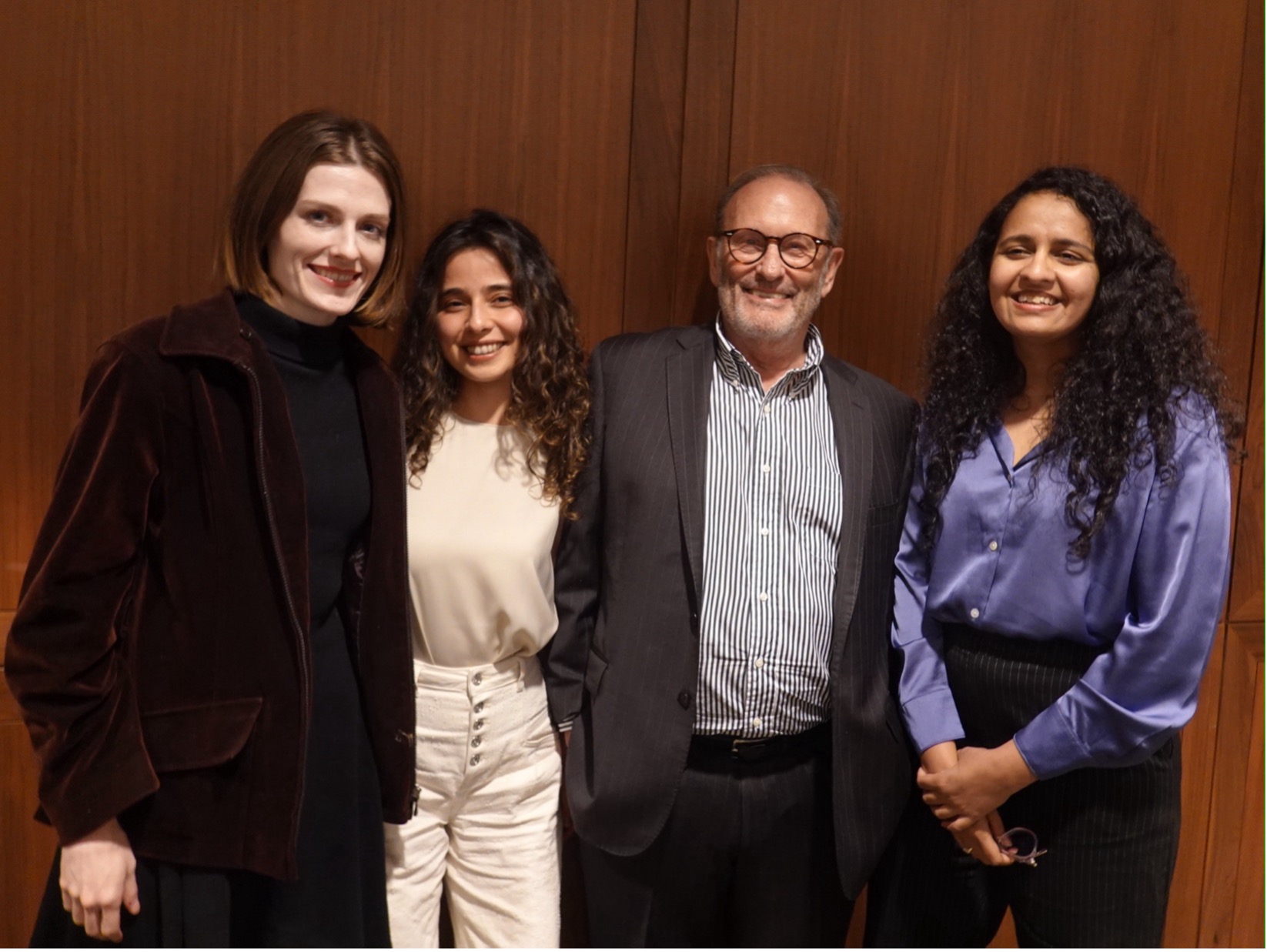
| A common refrain throughout the conference discussions was that Jeff is an extremely engaged and thoughtful mentor and colleague. He “helps students believe they have something important to say,” reflected Ron Jacobs; he invests in his students’ personal and academic well-being, added Bernadette Nadya Jaworsky. Jeff, reflected Anne Kane, has not only “theoretical brilliance, but … unending encouragement and enthusiasm for his students and their work.” Nadine Amalfi, CCS program coordinator, shared how throughout her twenty-year professional relationship with Jeff, she had come to view him like a brother. Jeff really “sees” people – he asks about their loved ones; he checks in on their mental wellbeing; he remembers papers they wrote weeks or months or years ago. If you send him a piece of writing, he will likely respond in a day or two with paragraphs of in-depth comments. He is energized by friendly intellectual sparring – he likes to challenge people, not because of some unwavering commitment to his own ideas, but because he likes to see if the conversation heads anywhere new or interesting. He’s principled, but not dogmatic. Indeed, a key attribute highlighted by conference participants is Jeff’s generosity and creativity as a collaborator. He pulls people into his orbit, learns from them. Celebrating Alexander’s collaborative spirit is perhaps one of the most important takeaways from the conference. Both Jeff the mentor and Alexander the icon understand even his most seminal works as the start, not the end, of the conversation. A significant portion of the conference discussion centered on new ways to think about, expand, or reimagine some of Jeff’s key theoretical ideas – including civil sphere theory – and to answer “the unanswered questions the theory invites” (Giuseppe Sciortino & Peter Kivisto). This mission is evident in the aforementioned efforts to deprovincialize civil sphere theory, which invites such questions as “how the cultural codes of the civil sphere relate to long-standing traditional values and moral codes such as patrimonialism and neo-Confucianism” in East Asia (Agnes Ku), or how transcultural dynamics and international relations impact the civil sphere (Jean-François Côté). Participants critically examined Alexanders’ theoretical insights alongside studies of nationalism (Eric Taylor Woods), colonialism (Bernadette Nadya Jaworsky), migration (Giuseppe Sciortino & Peter Kivisto), the ethnographic method (Anna Lund), other approaches to analyzing culture (Lynette Spillman), psychoanalysis (Emirbayer), and metatheory (Frédéric Vandenberghe). It is these kinds of investigations that will invigorate the next generation of cultural sociologists as they think through Alexander’s insights in generative new ways. One thing is certain: Alexander has made an indelible mark on sociology, and his legacy will inspire cultural sociologists across the globe to “work toward meaning together” for decades to come. |
 section CULTURE
You must be logged in to post a comment.